

Loft Conversion South London
Loft conversions that add space, calm, and long-term value to South London homes
There is a lot of potential hiding above your ceiling. Most homes have it. Few use it well. We design and build loft conversions across South London that turn unused roof space into rooms that feel easy to live in and easy on the eye. Bedrooms that stay quiet. Home offices with proper light. Spaces that give you breathing room instead of taking it away. Loft conversions are all we do. That focus matters. Every loft we design is shaped around the house you already have, not forced on top of it. Solid structure. Full compliance. A layout that makes sense now and still will in ten years. From the first feasibility checks to the final details, every London loft conversion we deliver is planned carefully and built properly. Nothing rushed. Nothing awkward. Just a new space that feels settled, natural, and confidently part of the home. If you are browsing ideas, comparing loft conversion companies, or simply trying to work out whether your roof space is worth the effort, clear and practical information makes everything easier. That is exactly what we offer.
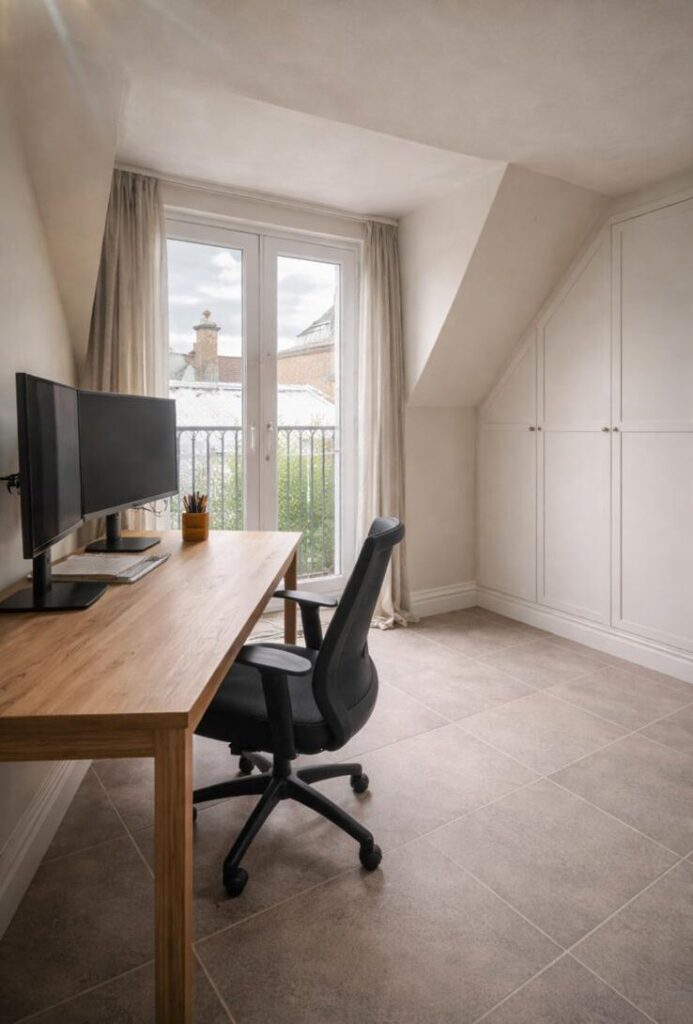
Loft conversions shaped by South London housing
Before design comes understanding. South London homes follow recognisable patterns, and those patterns determine what works well in a loft conversion.
Victorian and Edwardian terraces are common for good reason. They are well built and often ideal for loft conversion. Steep roof pitches and solid timber frames suit dormer and mansard designs, creating generous space above. Inside, layouts are tighter, so stair placement must be carefully planned to meet fire safety and head height requirements. When done properly, the loft feels like a natural part of the original house.
1930s semi-detached houses often respond well to hip to gable conversions. Extending the sloping side roof into a vertical wall can unlock usable floor area and simplify layouts. These homes typically allow clearer stair positioning and often produce loft rooms that feel calm and well proportioned.
Planning context also plays a significant role. Around Clapham Common, rear dormer lofts are widely accepted and commonly approved. Near Greenwich, roof alterations are more closely controlled, and mansard designs are often chosen to maintain architectural consistency. Properties close to Crystal Palace benefit from elevation, which makes daylight, outlook, and glazing strategy an important part of loft design. In neighbourhoods such as East Dulwich, homeowners frequently convert rather than move, protecting school catchments, transport links, and established routines.
Almost every property already contains an existing loft that remains unused. That unused loft space often represents the single largest opportunity to improve how the house works. Converting it can ease pressure throughout the property, allowing existing rooms to return to their intended use.
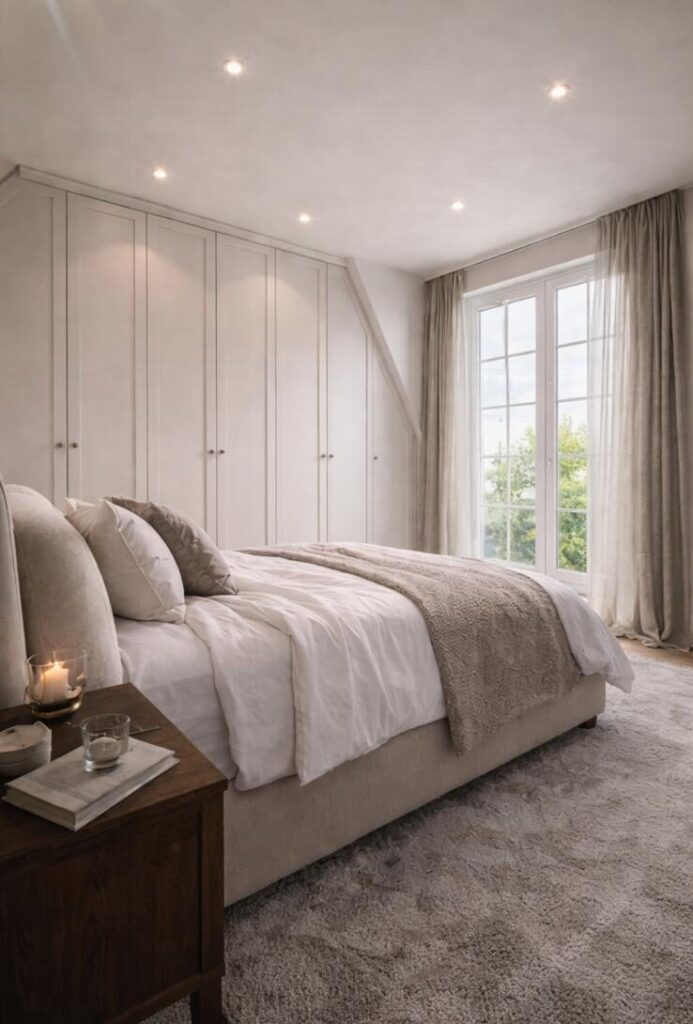
Why loft conversions make sense for South London homes
Across South London, loft conversions are chosen because they solve practical problems without introducing new ones.
Changing lifestyles demand more from the same four walls. By converting the loft, homes gain usable space above without extending into the garden or reshaping what sits below.
For growing families, this often becomes additional bedrooms or a clearer separation between parents and children. For others, it offers a quiet workspace, a guest room, or a flexible top-floor retreat that can change as life does.
A completed loft conversion also contributes directly to value to your property, particularly for London properties where additional compliant living space is highly sought after. Compared with moving house or extending outward, loft conversions consistently offer strong value for money.
Comfort is another benefit. Modern insulation standards, improved glazing, and proper ventilation often make a converted loft one of the most pleasant areas of the home throughout the year.
Types of loft conversion in South London
Loft conversions are highly specific to their setting. The house, the street, and the intended use all shape the right approach. For every South London project, we start by assessing the property itself. The roof shape. The space available. The neighbours on either side. The local planning rules that dictate what is possible. As loft conversion specialists, our role is simple. We prevent good-looking plans from becoming awkward rooms. No showpiece layouts that fall apart the moment you try to use them.
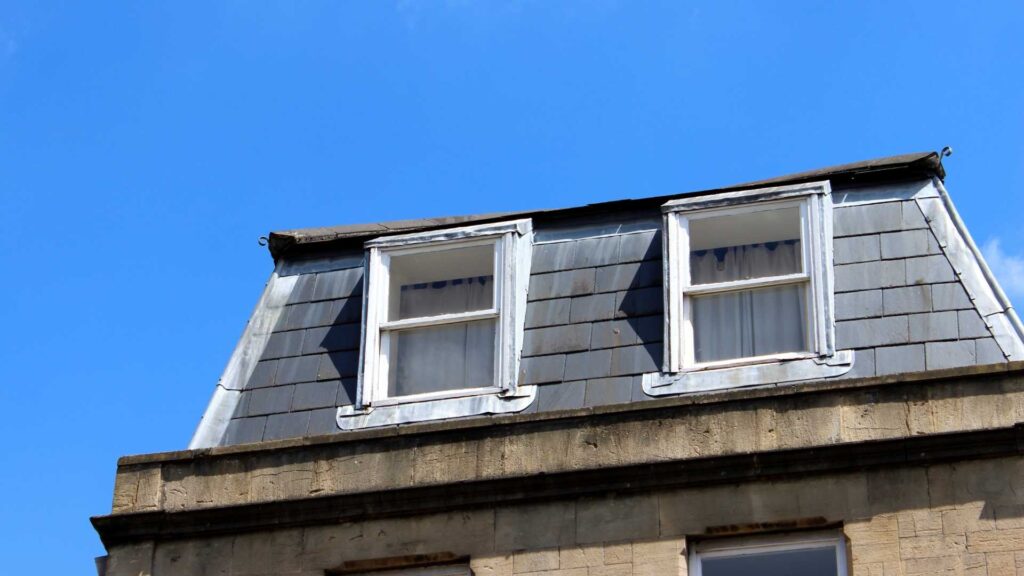
Dormer loft conversion
Dormer loft conversions are a common choice across South London, and they work especially well on Victorian and Edwardian terraces. The idea is simple. Extend up from the existing roof slope and create real head height and usable space, right where you need it.
We often recommend a single dormer when the brief is clear. One generous room. A bedroom or a home office. The approach keeps the house as it is, without overworking the design or structure. It is a simple, effective way to gain usable space.
A rear dormer is far more common on South London terraces. Built to the back of the house, it keeps the front roofline intact while creating enough room for proper bedrooms, fitted storage, and bathrooms. A full-width rear dormer loft gives us the flexibility to design spaces that feel comfortable rather than squeezed in.
If a dormer is kept within the allowed size and position, it can often be built under permitted development rights. For homeowners, that usually means a more straightforward process with fewer hold-ups.
L-shaped dormer loft conversion
An L-shaped dormer loft conversion can completely change how a Victorian terrace with a rear extension is used. It often marks the point where a loft becomes a full, functional new floor.
By wrapping around the back of the house and extending over the existing addition, this design creates a larger and more flexible layout. There is room to plan comfortably, with better proportions and clearer circulation.
We typically recommend an L-shaped dormer when the brief goes beyond a single room. It can accommodate a main bedroom with an ensuite, two separate rooms, or a layout designed to adapt as household needs change.
On streets where L-shaped dormers are already in place, adding another usually feels expected rather than out of place. This can make planning easier and help the conversion look balanced from the outside.
Hip to gable loft conversion
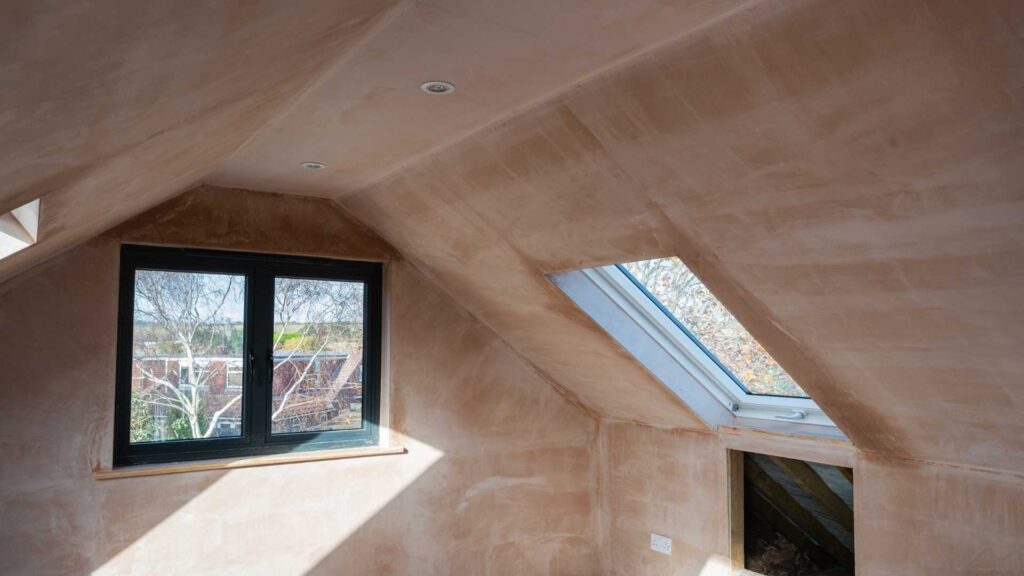
Many semi-detached and end-of-terrace houses lose valuable loft space to a sloping side roof. A hip to gable conversion fixes that by extending the slope into a full wall, creating a loft that feels squarer, wider, and more usable.
This extra width makes planning the space more straightforward. Rooms can be laid out more efficiently, staircases can be positioned more logically, and storage can be integrated without awkward corners. Hip to gable conversions are often combined with a rear dormer to increase floor area while keeping the structure clear and uncomplicated.
In South London, this type of loft conversion in South London is particularly common in 1930s housing, where the original roof form lends itself well to this type of conversion.
Mansard loft conversion
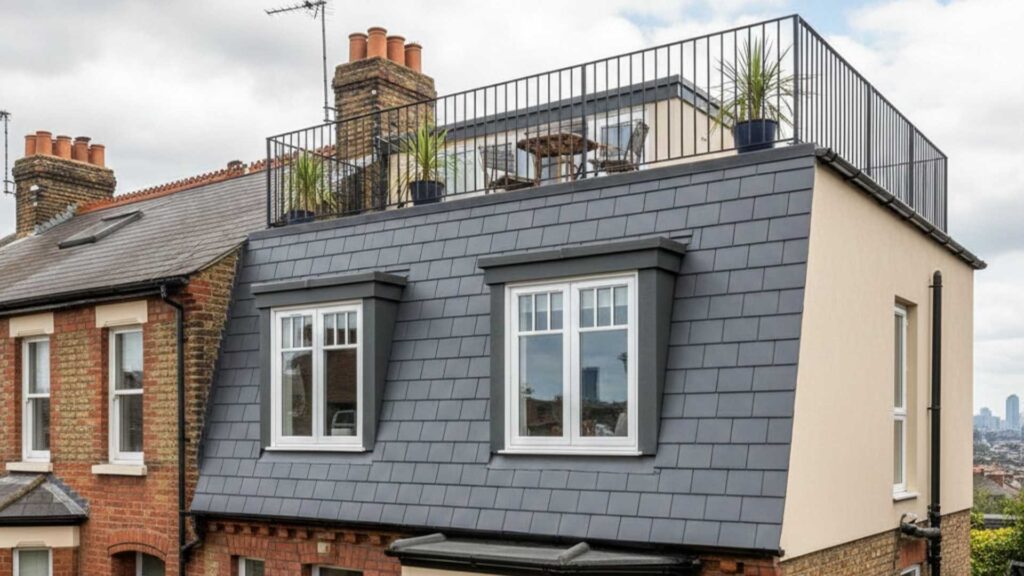
A mansard loft conversion offers the largest increase in usable space. By rebuilding the rear roof slope to near vertical, a mansard conversion creates a wide, almost rectangular internal layout with minimal sloping ceilings.
We recommend a mansard loft conversion when a significant amount of space is required for the long term. It suits households that need more than a single additional room.
A mansard creates space that feels closer to a full storey than a simple loft. Multiple rooms or a generous main suite fit naturally. Planning approval is usually required due to the roof change, especially in conservation areas. Across South London, matching mansards along terraces often help preserve the overall look of the street.
Velux loft conversions
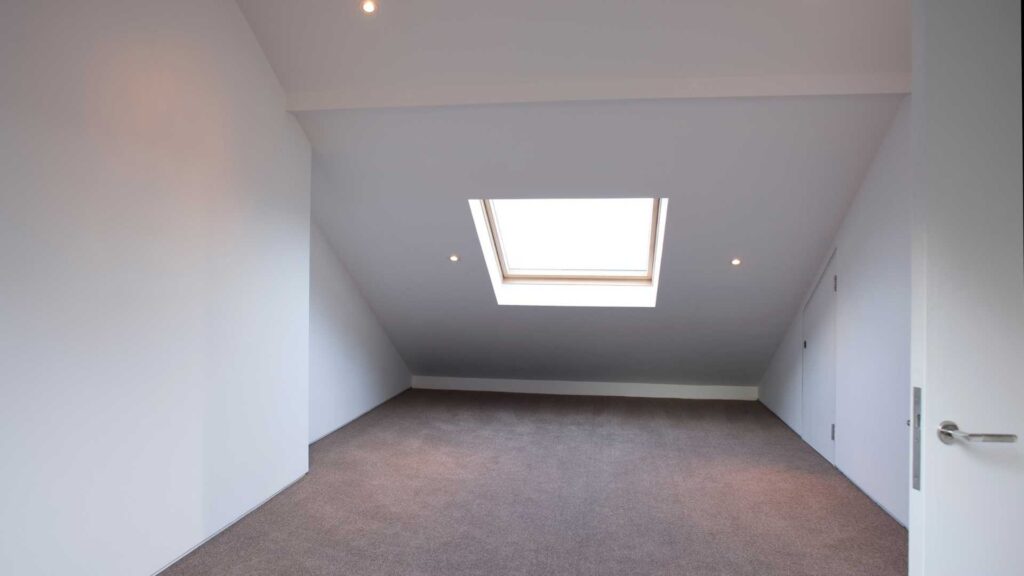
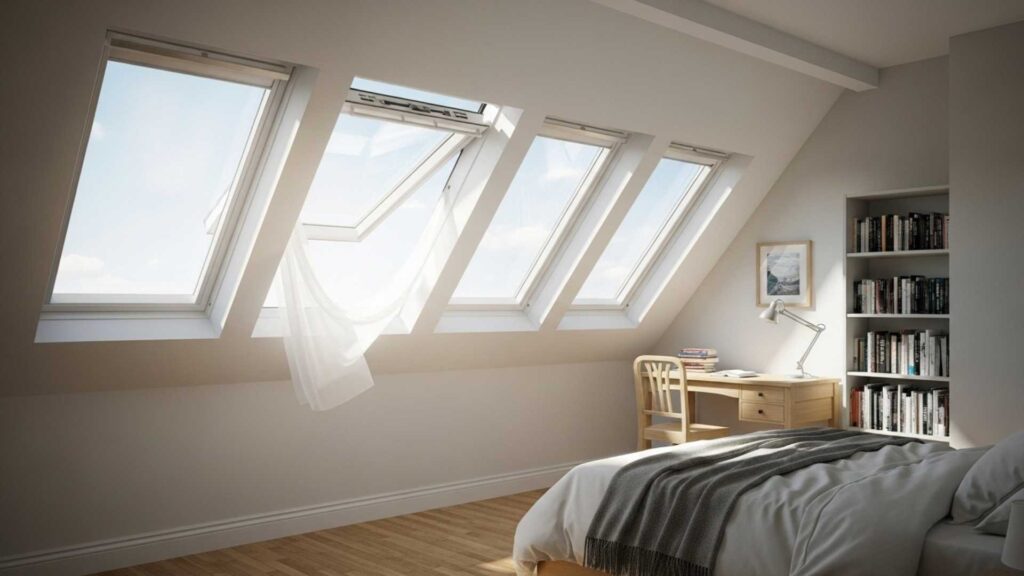
Velux conversions keep the existing roof structure in place and introduce roof windows to bring in light. This option works well where the current loft space already has good head height and the goal is to keep external changes minimal.
We often recommend Velux lofts for home offices, guest rooms, or studios where simplicity and speed are important. While they don’t add as much floor area as dormers or mansards, they can still create bright, comfortable rooms and offer excellent value for money.
Pitched dormers
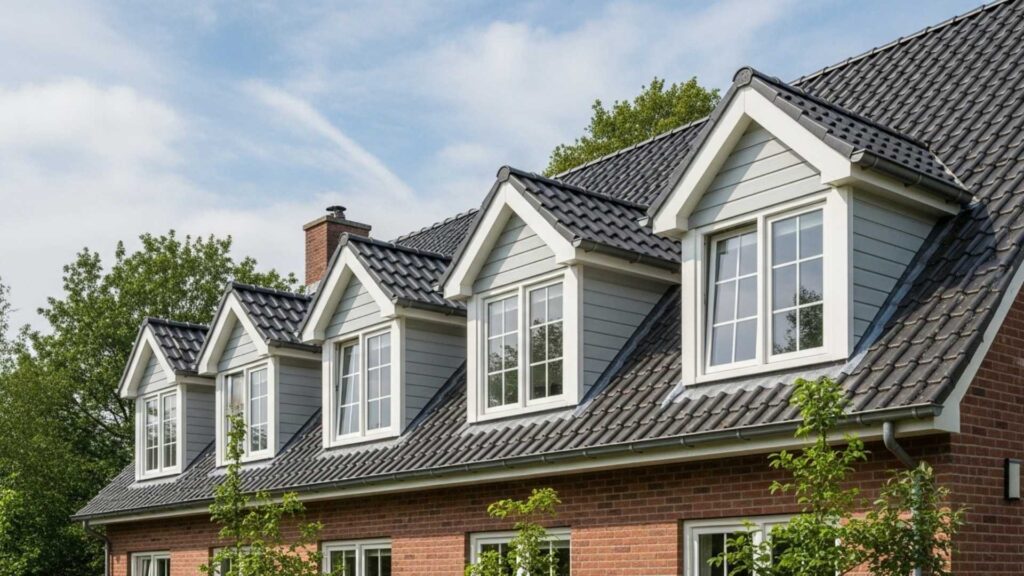
Pitched dormers follow the same angle and shape as the existing roof. They follow the same angle and shape as the existing roof, so rather than drawing attention, they blend straight in.
That is why they are often chosen in areas where the appearance of the house matters, or where a more traditional look feels appropriate. From the street, the roofline stays familiar. Nothing looks overworked or out of place.
Inside, though, the benefit is clear. You still gain useful space and better head height, just without changing the character of the home.
Get a free quote
For a free site survey please fill out the form below and we’ll get back to you, or call our freephone number 02034881943 if you have any questions.
One right fit for your home.
Most people don’t come to us saying, “We want this exact type of loft conversion.” They come to us because the house feels stretched and the loft keeps getting mentioned as the obvious next step. That’s how it usually starts.
In South London, loft conversions are less about big ideas and more about practical choices. Pick the option that suits your roof, your space, and what the room needs to be once it is finished.
- Dormer loft conversion for adding head height and usable floor area in a practical, flexible way
- Hip to gable loft conversion for semi-detached and end-of-terrace homes with sloping side roofs
- Mansard loft conversion when maximising usable space is the priority and planning allows
- Velux loft conversion where existing head height supports a simpler structural approach
- Pitched dormers where roof appearance and street character need to be carefully maintained
Our approach is to filter out what will not work and concentrate on what will. By analysing the structure, usable loft space, stair layout, and planning limits, we can clearly explain how each solution would work in practice.
Loft conversion or extension
When deciding between a loft conversion or extension, the difference is not theoretical, it shows up in how the project affects your day-to-day life and how the house functions once the work is finished.
Rather than cutting through the house, a loft conversion builds on what is already there. Many South London roofs span the full width of the property, keeping structural work contained at roof level.
That means less disruption downstairs. Kitchens and living rooms usually stay in use, and access to the garden is often unaffected. While the work takes place above, life below can largely carry on as normal.
By contrast, a rear or side extension often involves:
- Excavating foundations close to neighbouring properties
- Temporary loss of garden space and access
- Significant disruption to kitchens, dining areas, and services
- Longer build programmes tied to ground conditions
In many South London streets, especially terraced and semi-detached roads, garden depth is limited. Extending outward can reduce usable outdoor space and introduce planning challenges with neighbours and boundaries. A loft conversion avoids those issues by building within the existing footprint of the house.
From a layout point of view, converting upward also allows clearer zoning of the home. Bedrooms or workspaces can sit quietly on the top floor, while living areas remain below. For families, this separation often makes the house feel larger than the square footage suggests.
In South London properties with little room to expand sideways, loft conversions often make more sense. They provide additional space without the prolonged disruption or layout compromises that can come with outward extensions.
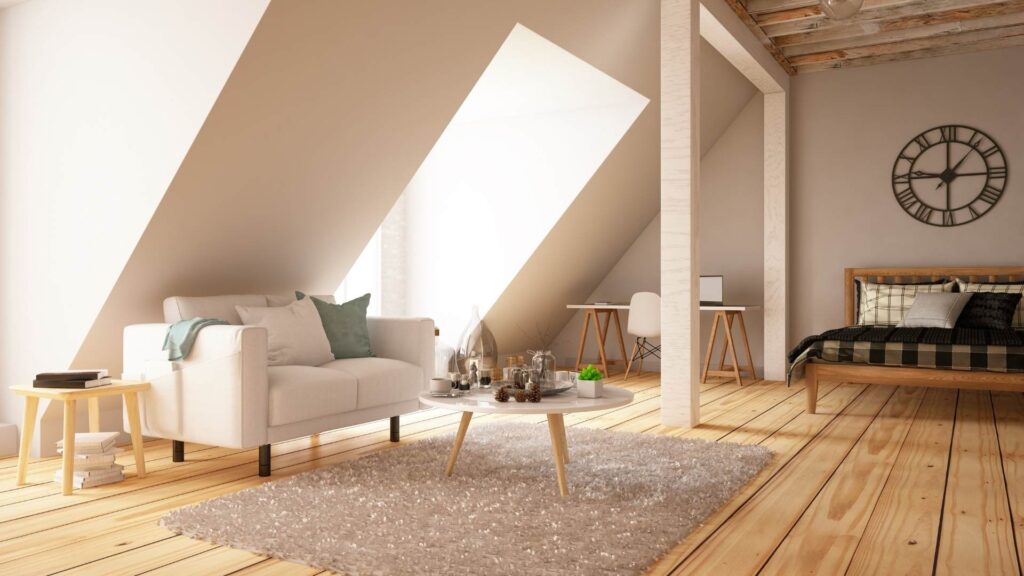
Our loft conversion process
Every loft conversion project we take on follows the same structured process. It’s designed to remove uncertainty, keep decisions clear, and make sure the finished loft works properly within the home, not just on paper.
Step 1: Survey and feasibility
We start by getting to know your house. The loft, the structure below it, the roof shape, the head height, and where a staircase could realistically go. We also check fire safety requirements and overall space. This stage sets the limits and the opportunities, so there are no surprises later.
Step 2: Layout and design
Once we know what works, the design takes shape. Layout, structure, and build method are developed together. We look at stair position, room sizes, insulation, and windows as one complete picture. This avoids tight stairs, low ceilings, or rooms that never quite feel right.
Step 3: Planning and regulations
Where planning permission is required, we manage the process and confirm whether the project qualifies as permitted development. All applications and coordination are handled on your behalf.
Building regulations are considered from day one. Structure, fire safety, insulation, and soundproofing are all designed in early, so the build runs smoothly without last-minute changes.
Step 4: The build
During construction, a dedicated project manager oversees the project. Trades are coordinated, inspections are scheduled, and quality is monitored throughout. The aim is steady progress and consistent standards.
Step 5: Handover
Once the work is complete, the loft is fully signed off and ready for everyday use. At this stage, it should feel settled and properly integrated with the rest of the house, not new or separate, but a space that belongs and is built for the long term.
Party wall and neighbour considerations
Protecting your project, your home, and your relationships
In South London, houses sit close together. Many share walls. Some share roof structures. Most share boundaries that matter more once building work begins. Because of this, loft conversions rarely affect just one property.
Party wall matters form part of everyday loft conversion work in this area. They are not a technical extra or something to deal with later. They shape when work can start, how it progresses, and how smoothly the project runs once scaffolding goes up.
A party wall agreement is often required when work affects a shared wall, boundary, or roof structure. This applies to many dormer, L-shaped dormer, hip to gable, and mansard loft conversions, particularly in terraced housing. Addressing this early brings clarity. Everyone understands what work will take place, what protection exists, and how responsibility is shared.
Our approach includes party wall matters from the beginning. We assess whether notices apply, explain the process in plain language, and make sure the correct steps happen at the right time. This avoids situations where work needs to pause while paperwork catches up. It also prevents unnecessary tension with neighbours. Clear neighbour communication matters just as much as formal agreements. People usually want reassurance, not arguments. Letting neighbours know what is happening and for how long keeps things practical and friendly.
Conservation areas bring added sensitivity. Planning oversight increases and neighbours often feel more invested in the appearance of the street. In these locations, structure and transparency become even more important. A clear process protects the build and helps maintain good working relationships throughout construction. Handled properly, party wall and neighbour considerations support the project rather than slowing it down. They create a calmer environment for everyone involved and allow the loft conversion to move forward without unnecessary disruption.
What a quality loft conversion delivers
Space that works properly, day in and day out
A loft conversion proves its value after daily life resumes. The real test comes when furniture arrives, storage fills, and routines settle. A good loft makes the house easier to live in. A poorly planned one introduces friction that never quite goes away.
Comfortable access that fits the house
Stairs define how a loft feels from the moment it opens. Good stair design follows a logical route through the house and respects the rooms below. It meets building regulations without feeling steep or awkward. When access feels natural, the loft becomes part of everyday movement. Poor stair placement creates hesitation. People avoid using the space. Even a generous room can feel inconvenient if access never feels right.
Loft rooms shaped around real life
Well planned loft rooms respond to how people move and live. Ceiling heights feel balanced rather than forced. Walls remain usable. Sloping areas receive careful handling rather than being left as awkward corners.
The layout supports everyday furniture, so the room feels usable rather than something you have to keep adjusting.
Temperature, sound, and air handled together
Comfort depends on more than layout. Insulation affects warmth in winter and comfort during warmer months. Sound separation reduces noise travelling between floors. Ventilation manages condensation and overheating. These elements work together. Balanced insulation and ventilation allow the loft to stay comfortable year round while protecting the existing structure. This helps the space feel settled within the house rather than sitting apart from it.
Integration with the rest of the home
A successful loft connects naturally with the floors below. Floor levels align. Finishes feel consistent. The right stair placement makes the loft feel intentional. It connects naturally to the floors below and becomes part of how the house functions every day.
A lasting improvement rather than a short-term fix
You notice a good loft over time. The loft handles winter cold, summer heat, and everyday use without fuss.
Choosing the loft conversion company you can rely on
Why specialist experience matters
A loft conversion differs from general building work. It involves tight roof spaces, structural alteration, stair design, and strict safety standards, all while protecting the rest of the home. Experience shapes how these challenges are handled.
We work solely on loft conversions. That focus means our methods come from repeated experience rather than adaptation from other types of building work. Everything we do reflects how lofts function within South London homes and what allows them to remain comfortable, compliant, and durable.
Homeowners often ask what separates one loft company from another. The difference usually appears early. Clear explanations. Realistic layouts. Honest discussion about limitations. These details shape the final result far more than marketing material.
Homeowners choose us for practical reasons.
- Exclusive focus on loft conversions
• Familiarity with South London property types
• Early assessment of structure, stairs, and fire safety
• Clear explanation of planning and party wall requirements
• Consistent communication throughout the build
• Finished spaces that continue to work years later
Clients often say the whole thing feels easier once they know what to expect early on. Timelines and decisions receive explanation in plain language. This reduces uncertainty during construction.
Many homeowners comment on how well their loft functions months and years after completion. That feedback matters most. A space that works day to day offers more value than one designed only to impress at handover.
A large proportion of our work comes through recommendation. Homeowners pass our details on because they trust the outcome.
South London loft conversion FAQs
Does a loft conversion always need planning permission?
Not always. Rear dormer lofts often sit within permitted development. Mansard conversions and properties in conservation areas usually need approval, and this is checked early.
Are terrace houses in South London good candidates for loft conversions?
Yes. Many Victorian and Edwardian terraces convert well once access, safety, and shared walls are addressed from the start.
How long does a loft conversion take?
From day one on site, a typical loft conversion usually runs for about 8 to 12 weeks. Velux lofts often complete sooner. Mansard and large dormer projects often run longer since more of the roof needs rebuilding.
Can I stay in my home during the build?
In most cases, yes. Much of the work happens through the roof. The staircase installation is managed to reduce disruption.
Will I need a party wall agreement?
If your home shares a wall, quite possibly. Terraced and semi-detached houses often need one, and this is checked early so nothing slows things down.
What does a loft conversion cost in South London?
Costs follow complexity. Working with the existing roof keeps costs lower, with Velux lofts starting from £36,000 plus VAT. Rear dormers, which create proper floor space, generally range from £50,000 to £65,000 plus VAT. Hip to gable lofts with a dormer start from £65,000 plus VAT. Final costs depend on layout, structure, and finish.
Will a loft conversion add value?
Yes. Additional compliant living space holds strong appeal across South London, especially when it creates:
- an extra bedroom (or two)
- a bathroom or ensuite
- space that feels fully integrated with the rest of the house
Loft conversions across South London and beyond
We focus on loft conversions throughout South London, working across a wide range of neighbourhoods and property types. Projects also extend across London and nearby areas. Each loft conversion receives a design shaped by daily use rather than a standard template. Layout, access, and comfort guide every decision.
Ready to explore your loft space?
Many homes adapt gradually while the loft remains untouched. Storage spreads. Rooms take on multiple roles. Over time, the loft stops being an afterthought. It becomes the next logical step. A structural assessment comes first, to confirm whether a conversion would genuinely make the layout better. We start with a clear conversation and an experienced assessment of the property. Options are explained in plain terms, without pressure or unnecessary complexity. This allows homeowners to move forward knowing what is possible and what makes sense.